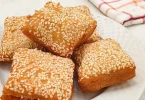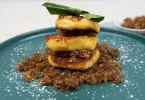
Indonesia’s sweet tooth is as diverse as the country itself. Indonesian desserts revolve around a beloved cast of ingredients: coconut milk, palm sugar, glutinous rice, pandan leaves, and tropical fruit. They come in brilliant greens, deep caramel browns, and rainbow layers, sold at morning markets, pushed on carts through neighbourhoods, and served at weddings and religious festivals. For travellers who only know the savoury side of Indonesian cooking, the world of jajanan, traditional snacks and sweets, is a delicious surprise waiting to be explored.
Klepon, Dadar Gulung, and the Kue Family
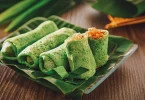
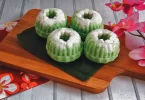
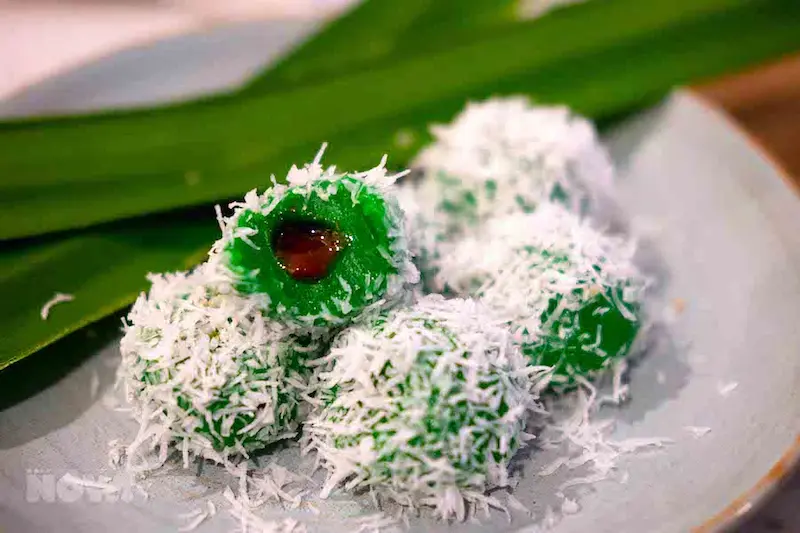
The word kue covers an enormous family of bite-sized cakes and snacks, many of them steamed and rice-flour based. Klepon are small green balls of glutinous rice flour, coloured and scented with pandan, filled with liquid palm sugar that bursts in your mouth, and rolled in grated coconut. Dadar gulung are thin pandan crepes wrapped around sweet grated coconut. Then there are the steamed sponge cakes, the sticky layers of kue lapis, and the chewy brilliance of wajik, all sold in mixed boxes at morning markets. These Indonesian desserts are designed for grazing: buy a box of ten varieties, share them with friends, and argue happily about favourites.
Es Cendol and Icy Refreshments
In a tropical climate, cold desserts are serious business. Es cendol combines green rice-flour jelly strands with coconut milk, shaved ice, and palm sugar syrup, sometimes crowned with jackfruit or durian. Es teler mixes avocado, coconut, and jackfruit in sweetened milk, while es buah turns chopped tropical fruit into a refreshing iced bowl. Street vendors assemble these drinks in seconds, layering colours in tall glasses. They are the natural partner to spicy food, cooling the palate while the palm sugar restores your energy for the next round of sightseeing.
Lapis Legit: The Thousand-Layer Celebration Cake
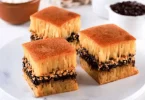
At the luxurious end of Indonesian desserts sits lapis legit, the spiced layer cake inherited from Dutch colonial baking and perfected in Indonesian kitchens. Bakers spoon thin layers of egg-yolk-rich, butter-heavy batter one at a time, grilling each before adding the next, until twenty or more layers stack into a dense, fragrant cake perfumed with cinnamon, cardamom, and cloves. A single cake can take hours and dozens of eggs, which is why lapis legit is reserved for Chinese New Year, Eid, Christmas, and gifts for honoured guests. A good slice, eaten slowly with strong coffee, is one of the great pleasures of Indonesian baking.
Finding and Ordering Sweets in the App Era
These days, hunting down famous kue shops often starts on your phone. Home bakers take orders through social media, delivery apps bring boxes of still-warm klepon across the city, and payment is usually settled instantly by e-wallet. Following a careful step-by-step installation walkthrough, like this mobile guide covering installation and getting started with an app, is a good habit whenever you set up any new app on your phone. And if you ever wonder how the money side of these platforms is organised, this overview of deposit options, withdrawals, and fast payouts in apps explains the mechanics that modern payment systems share. However you order, order extra: Indonesian desserts have a way of disappearing before you get home.
Sweet Traditions at Festivals and Family Tables
Desserts also carry meaning. During Ramadan, markets fill with takjil stalls selling sweet porridges, kolak of banana and sweet potato in coconut milk, and dates for breaking the fast. At Javanese celebrations, trays of kue are arranged as offerings of gratitude, their colours and shapes chosen with care. Recipes travel from grandmother to grandchild in handwritten notebooks and, increasingly, in family group chats, each generation adding its own tweaks. To eat these sweets at a family table is to taste memory itself.
Palm Sugar, Coconut, and Pandan: The Sweet Pantry
Three ingredients explain most of the flavour in the Indonesian sweet kitchen. Gula aren, palm sugar tapped from aren palms, brings a deep caramel sweetness with a hint of smoke that white sugar cannot imitate. Coconut appears in every form: rich santan milk pressed from grated flesh, toasted grated coconut, and young coconut water and jelly. Pandan leaves contribute the vanilla-like fragrance and natural green colour that define so many kue, while their spiky cousin, suji leaves, deepen the colour further. A well-stocked sweet pantry also holds glutinous rice flour for chew, mung beans for fillings, and agar-agar for the firm, sliceable jellies served at gatherings. Once you understand these building blocks, you can read almost any traditional recipe and predict how it will taste before you begin.
Modern Twists on Classic Sweets
Indonesia’s young bakers are busy reinventing the classics. Klepon flavours now appear in cakes, drinks, and even ice cream, pandan and palm sugar latte art fills cafe menus, and lapis legit arrives in matcha, cheese, and chocolate variations that would have scandalised earlier generations. Home bakers sell through social media with beautiful packaging, turning neighbourhood recipes into small businesses. Purists sometimes grumble, but the reinvention keeps the flavours in front of young customers who might otherwise drift entirely to imported desserts. The healthiest food traditions are the ones each generation makes its own, and on current evidence, the sweet kitchen of Indonesia is in energetic, creative hands.
Sweets also travel well as gifts, which has created a beloved culture of oleh-oleh, the edible souvenirs Indonesians are practically obliged to bring home from any trip. Every region guards a signature: pia cakes from Yogyakarta, lapis legit from Jakarta’s old bakeries, bika ambon from Medan, and abon-topped breads from Manado. Airports and train stations devote whole halls to these boxes, and choosing them is a social calculation of who gets what. For visitors, joining this tradition is a delightful assignment: ask locals what their city is famous for, buy a box for the people back home, and buy a second box for yourself, because the first rarely survives the journey intact.
Conclusion
Indonesian desserts deserve far more attention than they usually get from visitors. From the palm-sugar burst of klepon to the patient layers of lapis legit and the icy relief of es cendol, they show the same creativity and regional pride as the savoury kitchen. On your next trip to an Indonesian market, save room, follow the colours, and let the sweet stalls lead the way.